Swap Seats for Fairer Air
One simple action every school can take today.
A campaign by GO AQS and AtmosField
Same room.
Different air.
Swap seats.
Most classrooms do not know which seats experience the highest or lowest airborne exposure. Air can carry dust, allergens, outdoor pollution, indoor pollutants, wildfire smoke, bioaerosols and airborne pathogens.
Until we understand classroom air behaviour better, the fairest immediate action is simple:
swap seats regularly.
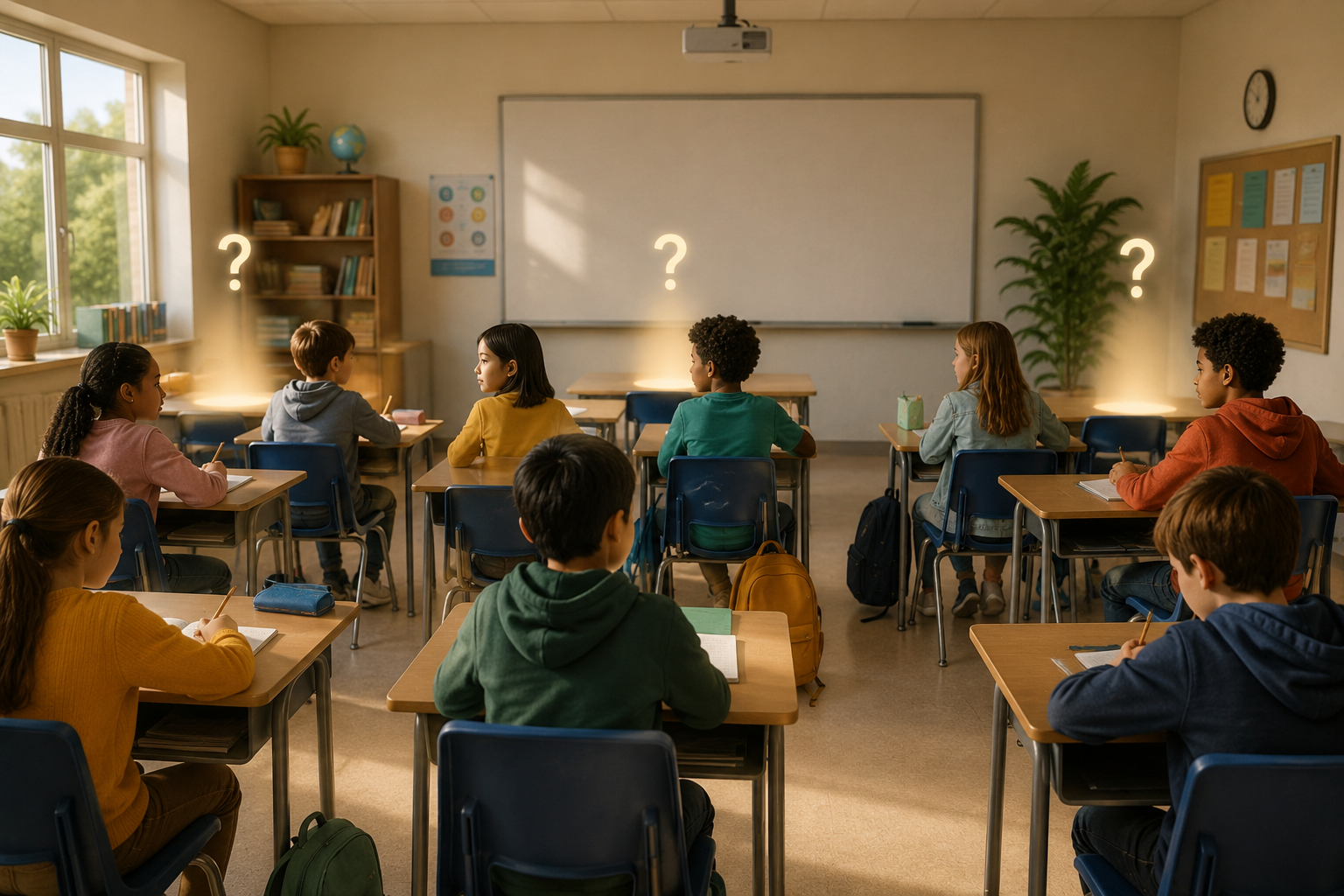
We do not know where the highest exposure seats are.
In many classrooms, children sit in the same place every day. But air does not distribute evenly. It moves around people, furniture, doors, windows, heat sources, ventilation points and air cleaning devices.
If exposure varies across the room, fixed seating may mean the same children repeatedly occupy higher exposure locations without anyone realising.
Swap Seats is a practical fairness action schools can take now.
A different seat.
Every day.
Where practical.
Swapping seats does not claim to solve classroom air quality. It is a simple first step that helps share unknown exposure more fairly while schools move toward better understanding.
Seat rotation should always respect teacher judgement, accessibility, SEND needs, safeguarding, behaviour plans and individual learning requirements.
Simple
Costs nothing and can begin immediately.
Fair
No child repeatedly occupies the same unknown exposure location.
Practical
Works alongside ventilation, filtration, monitoring and every other indoor air improvement.
From room averages to exposure equity.
A room average tells us about the room. Exposure equity asks what each child experiences. Traditional monitoring often relies on one sensor or one average value. That information matters, but it does not always show how exposure may vary from one seat or zone to another.
- One sensor
- One number
- Many unknowns
- Air behaviour
- Seat-to-seat variation
- Fairer decisions
Three things you can do today.
Take the Fairer Air Pledge
Show your support for fairer airborne exposure in education.
Take the PledgeAdd your school to the Fairer Air Map
Join schools around the world taking action for fairer air.
Add Your SchoolBring Swap Seats to your country.
For every child. In every classroom. In every country.
Swap Seats is designed to be simple enough for every school to understand and practical enough to begin immediately.
We are calling on organisations around the world to help introduce Swap Seats in their own countries, regions and school networks.
This is a global campaign for the health of children everywhere. It starts with one simple action: rotate seating so no child repeatedly occupies the same unknown exposure location.
But the bigger goal is more informed decision-making. Swap Seats opens the door to a new conversation about air behaviour, exposure equity and how classrooms really work.
It is time to turn clean air guidance into simple classroom action.
Governments and public bodies
Help make exposure equity part of healthy school policy.
Education networks
Introduce Swap Seats across schools, colleges and universities.
Clean air organisations
Bring the campaign to your region and community.
Universities and researchers
Help build evidence around air behaviour, seating and exposure equity.
Health organisations
Support a simple preventative action for healthier learning environments.
Technology and built environment partners
Help future classroom solutions align with real exposure, not assumptions.
Swap Seats is today's action. Classroom Intelligence is tomorrow's understanding.
The next step is helping schools make more informed decisions about their rooms. Classroom Intelligence will use better inputs to support better decisions about room layout, seating, sensors, ventilation, air purifiers, learning zones, noise, energy use, maintenance and cost.
Better information. Better decisions. Better classrooms.
The more accurate the classroom input, the better the intelligence.
- Room layout
- Desk layout
- Windows and doors
- Ventilation
- Heating
- Occupancy
- Teacher position
- Movement
- Sensor location
- Purifier location
- Practical constraints
- Seat rotation guidance
- Room layout suggestions
- Purifier placement
- Sensor placement
- Ventilation routines
- Exposure insight
- Practical next steps
Powered by the developing AtmosField Air Intelligence approach.
Join the movement for fairer classroom air.
Every school, every partner, every parent, every teacher can take one simple action today.